Requirement map
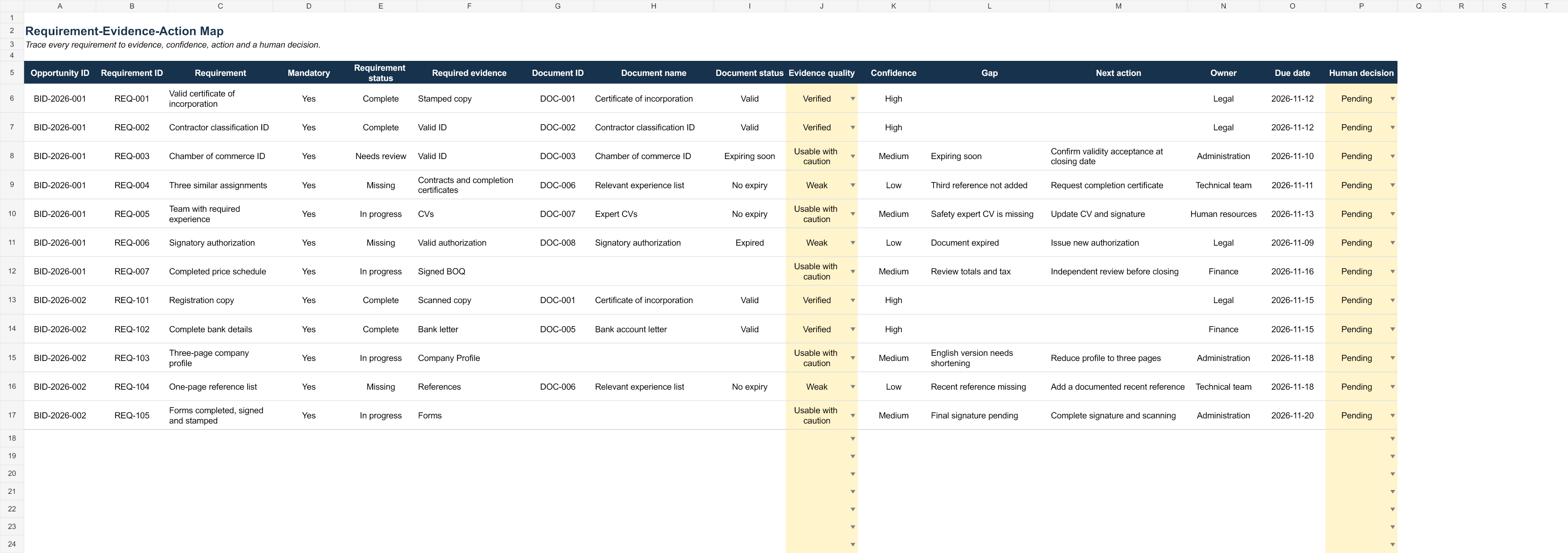
A structured view of material obligations, requested responses and submission conditions.
RESEARCH / DIRECTION / DECISION
TENDER / BID / DECISION READINESS
Turn tender requirements, evidence, pricing, risks and submission tasks into one controlled decision process. We help teams identify material gaps, connect each requirement to evidence and ownership, review true commercial exposure and reach a defensible bid or no-bid decision.
Available in English or Arabic. Scope and timing are agreed before work begins.
This synthetic example shows how requirements, evidence quality, confidence, open gaps and human decisions remain visible in one controlled review.
The website images are static. Depending on the agreed scope, the delivered workbook can include native editable Excel charts, filters, controls, calculations and traceable source data.
Select an image to open the full view and zoom.
01
The review creates one management view of what the request asks, what can be evidenced now and what still needs a decision.
02
The depth is proportionate to the opportunity and the material made available.
A structured view of material obligations, requested responses and submission conditions.
A practical check of whether each material response can be supported by an identifiable source.
Visible missing inputs, dependencies, conflicts and assumptions that could affect readiness.
Named internal responsibility and a usable next action for items that are not yet ready.
A concise view of readiness, unresolved choices and the decisions required before proceeding.
03
04
The review does not replace legal, tax, engineering or procurement sign-off. It organizes the available basis for a clearer management decision.
Confirm the submission context, material available, practical boundary and decision point.
Connect requirements, evidence, gaps, owners and blockers in one working view.
Set out the unresolved management decisions and the next practical actions.
05
06
Begin with a short description of the opportunity and the decision date. Do not send bank details, passwords, verification codes, classified material or sensitive identity documents by email. A suitable exchange channel and access boundary can be agreed before detailed material is shared.
07
Tell us the opportunity, decision point, available material and timing. We will respond with the questions needed to define a proportionate review.